
Shelving
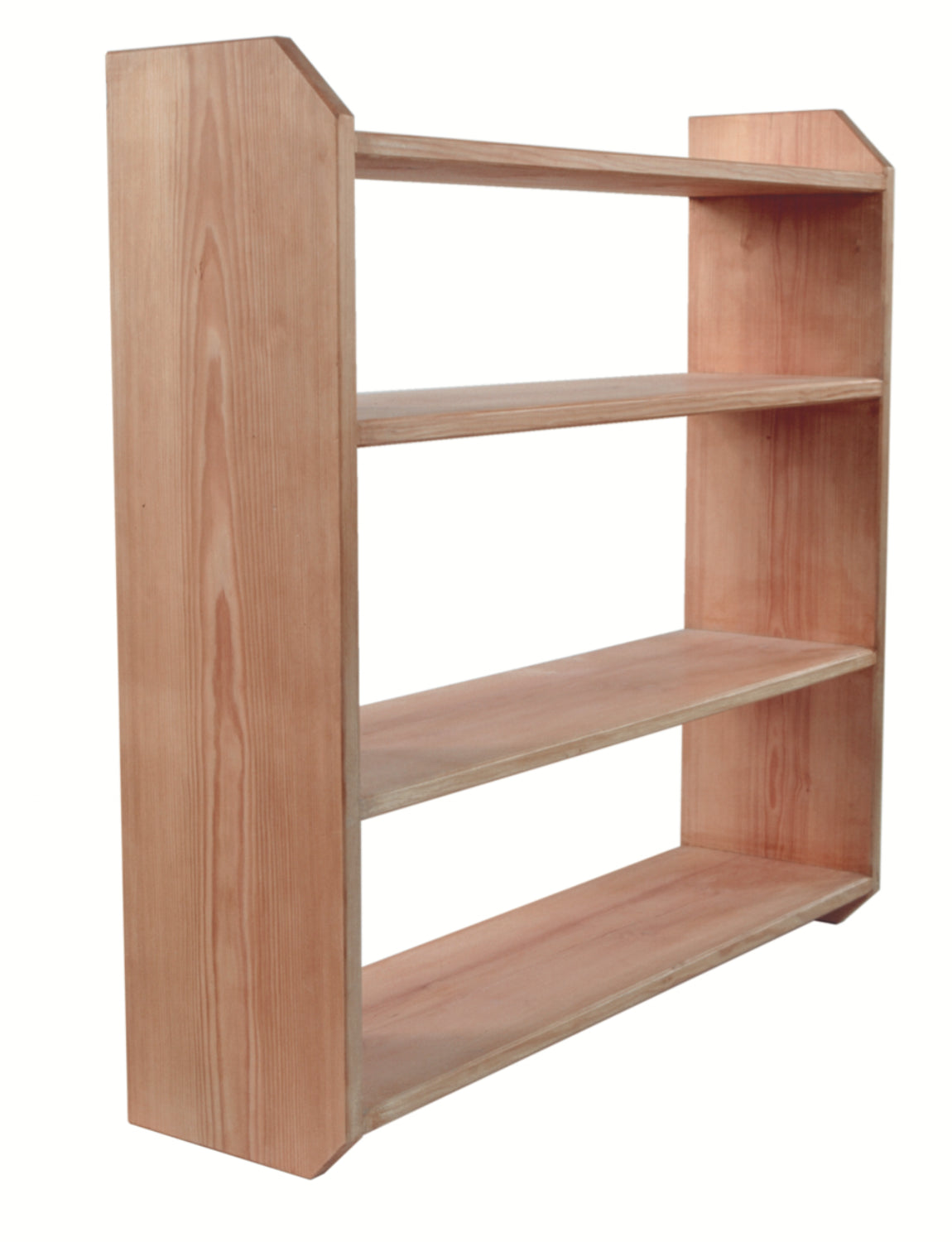
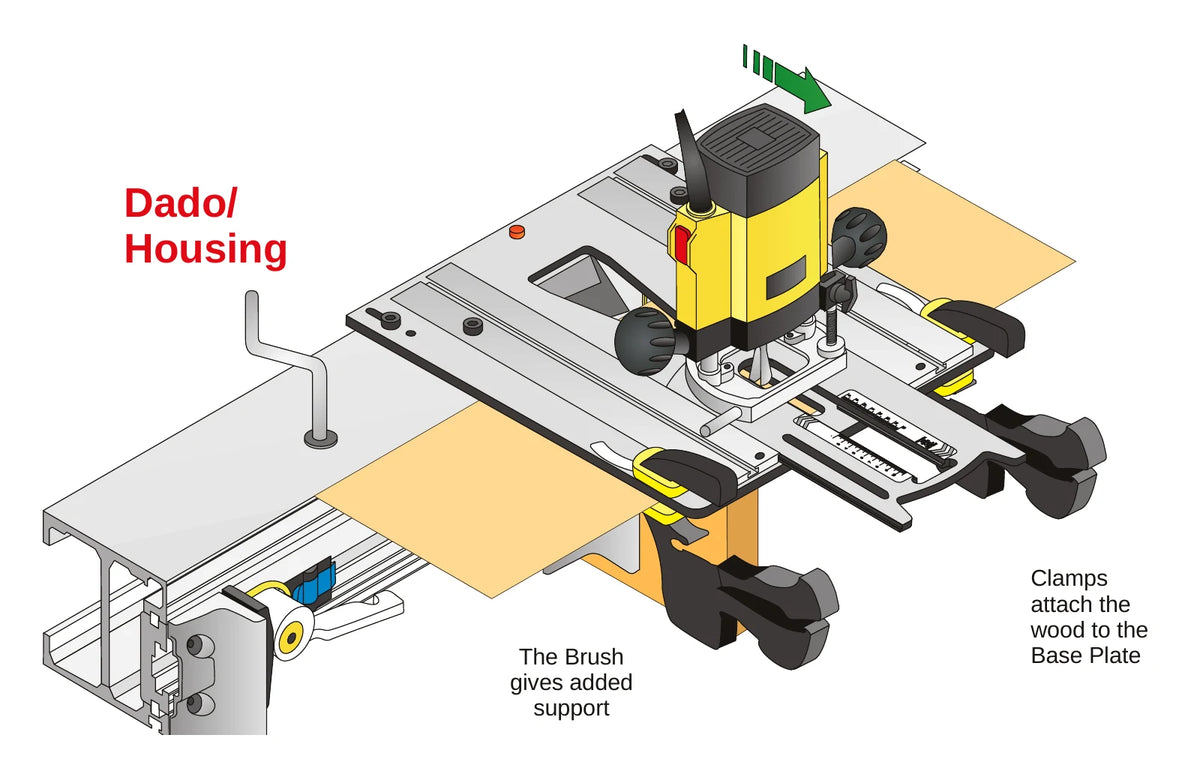
You can't make a crosscut on a router table. Imagine taking off the fence and trying to push a long shelf end squarely across it. The WoodRat makes it simple: support the board in the Cam Lock, with rollers either side as needed, clamp it to the Base Plate and pull a cut across it. A straight bit gives a dado (housing) joint; a dovetail bit gives a sliding dovetail.
The crosscut is the female half of the housing joint. The male half is made as a wide, shallow tenon.
A simple action like the crosscut often leads somewhere interesting, for example...
Grilles and gratings
Crosscut a plank at regular intervals, then saw it into strips exactly the width of the kerf, and the pieces will interlock. Each strip forms a halving joint with the next, and together they make a grille, trellis or lattice: tableware trivets, paper-covered shoji screens, a frame for your sweet peas, or a grating for a yacht. One simple action, one big project.
Honeycomb tabletops
Or glue a grille between two sheets of plywood to make a light, strong tabletop.
Louvres at 45°
Louvres need a series of angled cuts. With a little adaptation, the Base Plate sits at 45° on the Channel and makes 45° cuts in the work tracking beneath it in the MR4 Mortise Rail, screwed to the Sliding Bar.
The 45° slots take the slats of a louvred shutter or door. The opposite side of the frame needs a mirrored arrangement: either turn the plates 45° the other way and cut into the solid frame, or cut a deep set of slots in one piece and resaw it to make two, gluing one to each stile.