
For me the WoodRat would pay for itself used solely for tenoning.
Lock the workpiece in the Cam Lock, depth the bit and cut. You can make perfect square tenons in four hits, and any kind you need: haunched, twin, double twin and so on. You can even cut compound angled tenons for chair making. It is one of many joints you can cut with the WR900 router joinery machine.
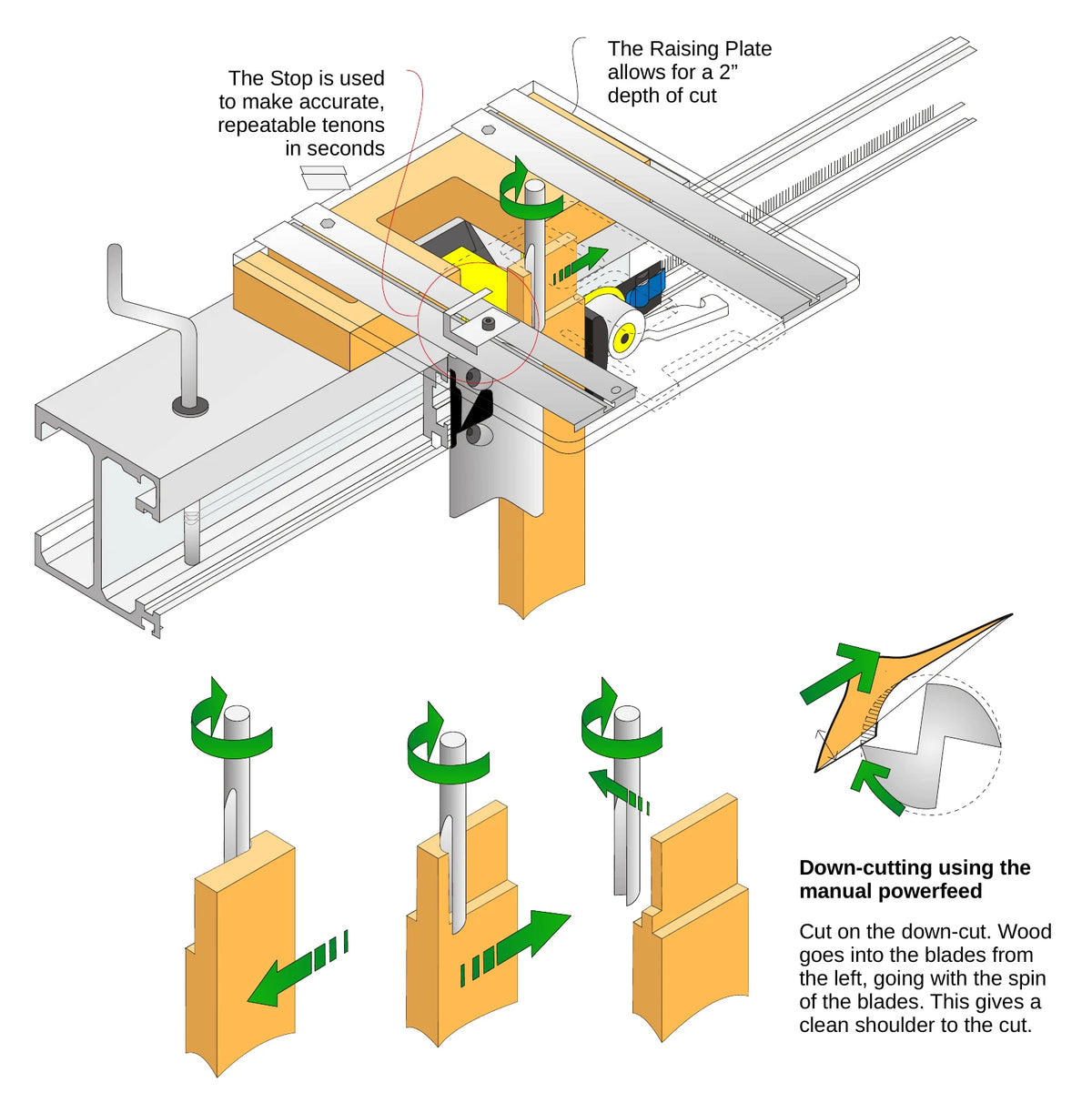
The maximum cut depth is 50mm (2"), standard for most routers and ample for most projects. Some routers have a greater reach, and you can make raising plates to give room for longer tenons.
Lightning fast
Our Stop and Block technique uses a stop in the base of your router that stops against the Guide Rail stop. Combined with a simple spacer block, it lets you make tenons (and sliding dovetails) of consistent width, knowing they will exactly fit your mortises.
Have a look at the Flightpath Sticker too. It's a simple way of checking exactly where you are going to cut your workpiece.
Clean shoulders
A router table is hopeless at cutting tenons, or any joint across the end of a rail. You have to go against the spin of the bit so the workpiece isn't snatched from your hands, exposing your fingers to the blades, and that up-cut also produces bad tearout.
The WoodRat cuts cleanly across the ends of boards because the Cam Lock holds the wood firmly as it feeds it steadily into the bit on the down-cut. You get a clean shoulder, and your tenons come off the bit as clean as a whistle. Down-cutting prolongs the life of the bit's edge, too.
Tenons of all kinds
Tenons can be long (for example for sliding dovetails), short, deep, shallow, twin or double, angled or compound angled. They can be through, stub, haunched, fox-tailed, pinned, or pinned with draw-pins. You can make bridle joints and mitred bridle joints with the same technique.
Without doubt, the best tenons I have ever cut have been with the aid of a WoodRat.